


As a seasoned supplier of impeller moulds, I've witnessed firsthand the critical role that parting lines play in the manufacturing process. Parting lines are an essential aspect of impeller mould design, influencing everything from the quality of the final product to the efficiency of production. In this blog post, I'll delve into the concept of parting lines in impeller moulds, exploring their significance, design considerations, and impact on the overall manufacturing process.
Understanding Parting Lines in Impeller Moulds
Parting lines are the boundaries where the two halves of a mould meet. In the context of impeller moulds, these lines are crucial as they determine how the mould will open and close, and how the impeller will be ejected from the mould after the plastic has cooled and solidified. The location and design of parting lines can significantly affect the quality of the impeller, including its surface finish, dimensional accuracy, and mechanical properties.
The primary function of parting lines is to separate the core and cavity of the mould, allowing for the removal of the finished impeller. When the mould is closed, the parting line forms a seal that prevents the molten plastic from leaking out during the injection process. Once the plastic has solidified, the mould opens along the parting line, and the impeller can be ejected.
Significance of Parting Lines in Impeller Moulds
The location and design of parting lines have a profound impact on the quality and performance of impellers. Here are some key reasons why parting lines are so important:
- Surface Finish: The parting line can leave a visible mark on the surface of the impeller. If the parting line is not properly designed, it can result in a rough or uneven surface finish, which can affect the aerodynamic performance of the impeller. A well-designed parting line can minimize the appearance of this mark, ensuring a smooth and uniform surface finish.
- Dimensional Accuracy: The parting line can also affect the dimensional accuracy of the impeller. Any misalignment or movement along the parting line during the injection process can result in variations in the size and shape of the impeller. This can lead to problems with fit and performance, especially in applications where precise tolerances are required.
- Mechanical Properties: The location of the parting line can influence the mechanical properties of the impeller. If the parting line is placed in a critical area, it can weaken the structure of the impeller, making it more prone to failure under stress. A carefully designed parting line can help to distribute stress evenly across the impeller, ensuring optimal mechanical performance.
- Ejection and Demoulding: The parting line plays a crucial role in the ejection and demoulding process. A well-designed parting line allows for easy removal of the impeller from the mould, reducing the risk of damage or deformation. It also helps to ensure that the impeller is ejected cleanly and efficiently, minimizing production time and costs.
Design Considerations for Parting Lines in Impeller Moulds
Designing the parting line for an impeller mould requires careful consideration of several factors. Here are some key design considerations to keep in mind:

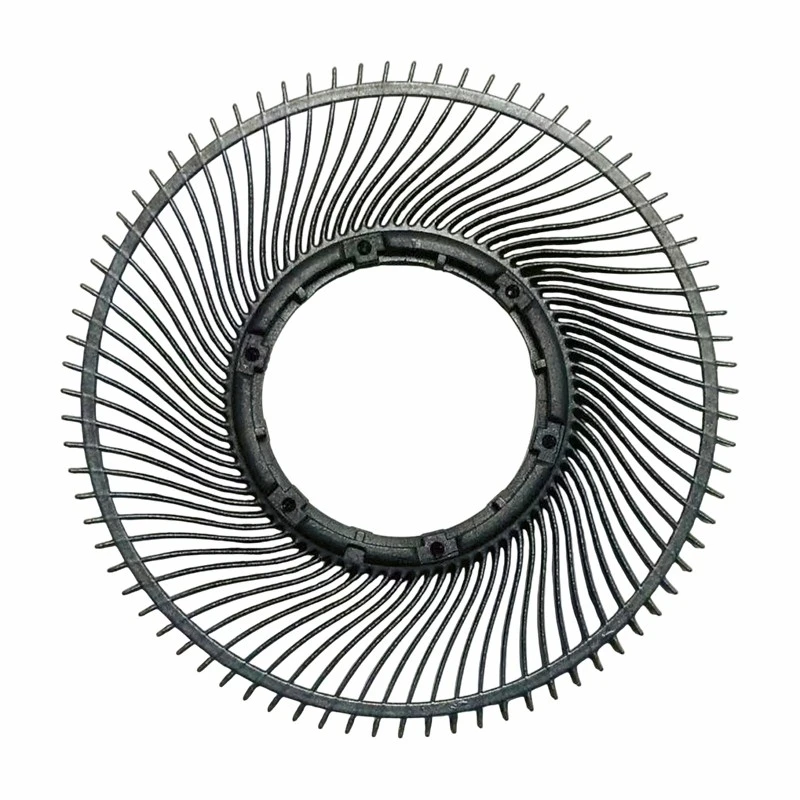
- Impeller Geometry: The shape and geometry of the impeller are the primary factors that determine the location of the parting line. The parting line should be placed in a way that allows for easy removal of the impeller from the mould, while minimizing the impact on the surface finish and dimensional accuracy. In general, the parting line should follow the natural contours of the impeller, avoiding sharp corners or complex shapes.
- Injection Molding Process: The injection molding process also plays a role in the design of the parting line. The parting line should be positioned in a way that allows for efficient filling of the mould with molten plastic. It should also ensure that the plastic flows evenly through the mould, minimizing the risk of air traps or other defects.
- Material Properties: The properties of the plastic material used to manufacture the impeller can also influence the design of the parting line. Some materials may require a specific parting line design to ensure proper filling and cooling of the mould. For example, materials with high viscosity may require a wider parting line to allow for easier flow of the molten plastic.
- Ejection Mechanism: The ejection mechanism used to remove the impeller from the mould is another important consideration. The parting line should be designed in a way that allows for easy access to the ejection mechanism, ensuring that the impeller can be ejected cleanly and efficiently.
Impact of Parting Lines on the Manufacturing Process
The design of the parting line can have a significant impact on the efficiency and cost of the manufacturing process. Here are some ways in which parting lines can affect the manufacturing process:
- Production Time: A well-designed parting line can reduce the production time by allowing for faster ejection and demoulding of the impeller. This can increase the overall productivity of the manufacturing process, reducing costs and improving profitability.
- Tooling Costs: The design of the parting line can also affect the tooling costs. A complex parting line design may require more expensive tooling, such as multi-cavity moulds or slides. On the other hand, a simple parting line design can reduce the tooling costs, making the manufacturing process more cost-effective.
- Quality Control: The parting line can also impact the quality control process. A poorly designed parting line can result in defects or variations in the impeller, which can increase the rejection rate and require additional inspection and rework. A well-designed parting line can help to ensure consistent quality, reducing the need for quality control measures and improving the overall efficiency of the manufacturing process.
Examples of Impeller Moulds with Different Parting Line Designs
To illustrate the importance of parting line design, let's take a look at some examples of impeller moulds with different parting line designs:
- Single Parting Line: A single parting line is the simplest and most common design for impeller moulds. This design involves a single line that runs around the circumference of the impeller, separating the core and cavity of the mould. Single parting line designs are easy to manufacture and are suitable for impellers with simple geometries.
- Multi-Parting Line: A multi-parting line design involves multiple lines that divide the impeller into sections. This design is more complex than a single parting line design, but it allows for greater flexibility in the design of the impeller. Multi-parting line designs are often used for impellers with complex geometries or features.
- Undercut Parting Line: An undercut parting line design involves a parting line that is not perpendicular to the axis of the impeller. This design is used to create undercuts or other features on the impeller that cannot be achieved with a straight parting line. Undercut parting line designs are more complex and require specialized tooling, but they can be used to create impellers with unique shapes and features.
Conclusion
In conclusion, parting lines are an essential aspect of impeller mould design, influencing the quality, performance, and manufacturing process of impellers. A well-designed parting line can minimize the appearance of marks on the surface of the impeller, ensure dimensional accuracy, and optimize mechanical properties. It can also reduce production time, tooling costs, and improve the overall efficiency of the manufacturing process.
As a supplier of impeller moulds, we understand the importance of parting line design and work closely with our customers to ensure that their impeller moulds are designed to meet their specific requirements. We use advanced design and manufacturing techniques to create high-quality impeller moulds with precise parting line designs.
If you're interested in learning more about our impeller moulds or would like to discuss your specific requirements, please don't hesitate to contact us for procurement discussions. We look forward to working with you to create the perfect impeller mould for your application.
References
- "Injection Molding Handbook" by Rosato, Rosato, and Bordern
- "Plastic Injection Molding Technology" by Osswald and Turng
- "Design for Injection Molding" by Boothroyd, Dewhurst, and Knight




