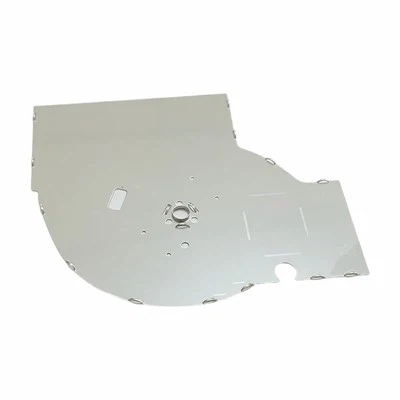
Hey there! As a supplier of Impeller Moulds, I've seen firsthand the amazing benefits these tools bring to the table. In this blog, I'll share with you the advantages of using an impeller mould, and trust me, there are plenty!
1. High Precision and Quality
One of the biggest perks of using an impeller mould is the high precision it offers. Impellers are crucial components in various machinery, like pumps, compressors, and fans. They need to be made with extreme accuracy to ensure optimal performance. An impeller mould is designed to create impellers with tight tolerances, meaning the final product will fit perfectly into the machinery it's intended for.
The precision of an impeller mould also translates to high - quality products. The moulds are usually made from high - grade materials and are machined with advanced techniques. This results in impellers that have smooth surfaces, sharp edges, and consistent dimensions. For example, in a pump, a precisely - made impeller can significantly improve the efficiency of fluid transfer, reducing energy consumption and wear and tear on the pump.
2. Cost - Effectiveness
When it comes to mass production, using an impeller mould is a cost - effective solution. Once the initial investment in the mould is made, the cost per unit of producing impellers drops significantly. This is because the mould can be used repeatedly to create identical impellers.
Let's say you're a manufacturer who needs to produce thousands of impellers for your products. If you were to make each impeller individually, it would be extremely time - consuming and expensive. But with an impeller mould, you can churn out impellers quickly and at a lower cost per piece. Additionally, the reduced waste in the manufacturing process also contributes to cost savings. Since the mould creates impellers with high precision, there's less need for post - processing, which further cuts down on production costs.
3. Customization
Every industry has different requirements for impellers. Some may need impellers with specific blade shapes, sizes, or materials. An impeller mould allows for a high degree of customization. As a supplier, we can work closely with our customers to design a mould that meets their exact specifications.
Whether it's a unique blade profile for a high - performance compressor or a special material for an impeller used in a corrosive environment, we can create a mould that will produce the desired impeller. This customization gives our customers a competitive edge in the market, as they can offer products with features that are tailored to their customers' needs.
4. Faster Production Cycles
Time is money in the manufacturing world, and an impeller mould helps to speed up production cycles. Once the mould is ready, it can produce impellers much faster than traditional manufacturing methods. The process of injection moulding, which is commonly used with impeller moulds, is a relatively quick process.
The mould is filled with molten material, which then cools and solidifies into the shape of the impeller. This entire process can be completed in a matter of minutes, depending on the size and complexity of the impeller. Faster production cycles mean that manufacturers can get their products to market more quickly, meeting customer demand and staying ahead of the competition.
5. Durability
Impeller moulds are built to last. They are made from strong and durable materials, such as hardened steel or aluminum alloys. These materials can withstand the high pressures and temperatures involved in the injection moulding process.
A well - made impeller mould can produce thousands, if not millions, of impellers over its lifespan. This durability reduces the need for frequent mould replacements, which in turn saves money and time for manufacturers. It also ensures that the quality of the impellers remains consistent over the long term.


6. Compatibility with Different Materials
Impellers can be made from a variety of materials, including plastics, metals, and composites. An impeller mould can be designed to work with different types of materials. For example, if you're interested in plastic impellers, we can provide a mould that is suitable for the specific type of plastic you want to use, such as polycarbonate or nylon.
This compatibility gives manufacturers the flexibility to choose the best material for their impellers based on factors like cost, performance, and environmental requirements. For instance, plastic impellers are often lighter and more corrosion - resistant than metal impellers, making them a great choice for certain applications. You can check out our Plastic Ball Bearing Cage and Plastic Rail Transit Bearing Cage for more examples of our plastic - based products.
7. Improved Product Consistency
When using an impeller mould, each impeller produced is virtually identical to the next. This consistency is crucial for the performance of the machinery in which the impellers are used. In a multi - stage pump, for example, all the impellers need to have the same dimensions and performance characteristics to ensure smooth and efficient operation.
With an impeller mould, we can guarantee that every impeller meets the same high - quality standards. This reduces the risk of product failures and improves the overall reliability of the end - product.
8. Environmental Benefits
In today's world, environmental concerns are more important than ever. Using an impeller mould can have some positive environmental impacts. As mentioned earlier, the precision of the mould reduces waste during the manufacturing process. Less material is wasted, which means less raw material consumption and less waste going to landfills.
Additionally, if plastic impellers are produced using the mould, some plastics can be recycled at the end of their lifespan. This contributes to a more sustainable manufacturing process.
If you're in the market for an impeller mould, we'd love to hear from you. Our team of experts can help you choose the right mould for your specific needs and guide you through the entire process, from design to production. Check out our Impeller Mould page to learn more about our products. Don't hesitate to reach out and start a conversation about your impeller mould requirements. We're here to help you take your manufacturing to the next level!
References
- "Injection Moulding Handbook" by O. Olanipekun
- "Precision Manufacturing Techniques" by R. Smith
- Industry reports on impeller manufacturing and mould technology