In the realm of electrical power distribution and management, busbars play a crucial role. As a supplier of Busbar U V W, I've witnessed firsthand the diverse needs and inquiries from customers regarding the differences between Busbar U V W and other types of busbars. This blog aims to shed light on these distinctions, providing a comprehensive understanding for those involved in the electrical industry.
Understanding Busbars
Before delving into the differences, it's essential to understand what busbars are. A busbar is a metallic strip or bar, typically made of copper, aluminum, or brass, that conducts electricity within a switchboard, distribution board, or other electrical apparatus. Busbars are used to collect and distribute electrical power, providing a common connection point for multiple circuits.
What is Busbar U V W?
Busbar U V W is a specific type of busbar commonly used in three - phase electrical systems. In a three - phase system, the electrical power is distributed across three conductors, labeled U, V, and W. These conductors carry alternating currents that are out of phase with each other by 120 degrees. Busbar U V W is designed to handle the high - current and high - voltage requirements of three - phase systems, ensuring efficient and reliable power distribution.
Key Features of Busbar U V W
- Phase Separation: One of the primary features of Busbar U V W is the clear separation of the three phases. This separation helps to prevent short - circuits and interference between the phases, ensuring the stability and safety of the electrical system.
- High Current Capacity: Busbar U V W is engineered to handle high currents. The design and material selection are optimized to minimize resistance and heat generation, allowing for the efficient transfer of large amounts of electrical power.
- Customizability: Busbar U V W can be customized to meet the specific requirements of different applications. This includes variations in size, shape, and material, depending on factors such as the current rating, voltage level, and installation environment.
Differences from Other Types of Busbars
Single - Phase Busbars
Single - phase busbars are used in single - phase electrical systems, which are commonly found in residential and small commercial applications. The main difference between Busbar U V W and single - phase busbars is the number of phases. Single - phase busbars carry only one alternating current, while Busbar U V W is designed for three - phase systems.
- Power Capacity: Three - phase systems, and thus Busbar U V W, can deliver more power compared to single - phase systems. This makes Busbar U V W suitable for industrial and large - scale commercial applications where high power is required.
- Complexity: Single - phase busbars are generally simpler in design and installation compared to Busbar U V W. The latter requires more careful planning and installation to ensure proper phase separation and connection.
DC Busbars
DC (Direct Current) busbars are used in applications where direct current is required, such as in battery - powered systems, solar power installations, and some electronic devices. The key difference between Busbar U V W and DC busbars lies in the type of current they carry.
- Current Type: Busbar U V W is designed for alternating current (AC), while DC busbars handle direct current. The electrical characteristics and requirements for AC and DC systems are different, which affects the design and performance of the busbars.
- Voltage Stability: DC busbars often require additional components, such as voltage regulators, to maintain a stable voltage. In contrast, Busbar U V W in a well - designed three - phase system can provide a relatively stable voltage without the need for extensive additional regulation.
Flexible Busbars
Flexible busbars are made of flexible materials, such as copper or aluminum foil, and are used in applications where flexibility is required, such as in moving parts or tight spaces. Compared to Busbar U V W:
- Physical Properties: Busbar U V W is typically rigid, which is suitable for fixed installations. Flexible busbars, on the other hand, can be bent and shaped to fit different geometries, providing more installation flexibility.
- Current - Carrying Capacity: While flexible busbars can carry significant currents, the rigid structure of Busbar U V W allows for better heat dissipation and higher current - carrying capacity in some high - power applications.
Applications of Busbar U V W
Busbar U V W is widely used in various industries due to its ability to handle three - phase power. Some common applications include:
- Industrial Manufacturing: In factories and manufacturing plants, Busbar U V W is used to distribute power to large motors, machinery, and equipment. The high - power capacity and stability of Busbar U V W ensure the smooth operation of these industrial processes.
- Data Centers: Data centers require a reliable and efficient power supply to support their servers and networking equipment. Busbar U V W is used to distribute three - phase power throughout the data center, providing the necessary power for cooling systems, servers, and other critical components.
- Renewable Energy Systems: In wind farms and large - scale solar power plants, Busbar U V W is used to collect and distribute the three - phase power generated by the renewable energy sources. This helps to integrate the renewable energy into the grid efficiently.
Related Products and Technologies
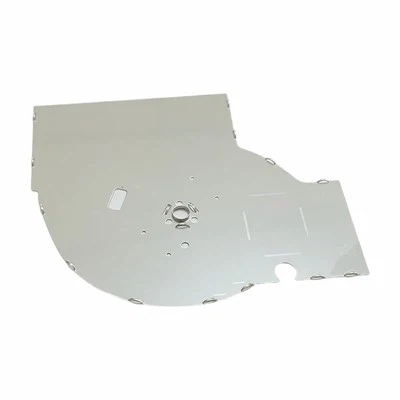
In the context of busbars, there are several related products and technologies that are worth mentioning. For example, Silicon Steel Sheets Are Automatically Stacked is a technology that can be used in the manufacturing of busbars. Silicon steel sheets are often used in transformers and other electrical components to reduce energy losses. The automatic stacking technology improves the efficiency and precision of the manufacturing process.
Another related product is Fisheye Terminals. Fisheye terminals are used to connect busbars to other electrical components, such as cables and circuit breakers. They provide a secure and reliable connection, ensuring the proper flow of electricity.
Pillow Cover is also relevant in the context of busbar protection. Pillow covers can be used to insulate and protect busbars from environmental factors, such as dust, moisture, and mechanical damage.


Why Choose Our Busbar U V W?
As a supplier of Busbar U V W, we offer several advantages to our customers.
- Quality Assurance: We adhere to strict quality control standards in the manufacturing process. Our Busbar U V W is made from high - quality materials and undergoes rigorous testing to ensure its performance and reliability.
- Customized Solutions: We understand that different customers have different requirements. That's why we offer customized Busbar U V W solutions, tailored to the specific needs of each application.
- Technical Support: Our team of experts is available to provide technical support and advice to our customers. Whether it's installation guidance or troubleshooting, we are committed to helping our customers make the most of our products.
Contact Us for Procurement
If you are in the market for Busbar U V W or have any questions about our products, we encourage you to contact us for procurement and further discussions. Our team is eager to assist you in finding the best Busbar U V W solution for your specific needs.
References
- "Electrical Power Distribution Systems" by John G. Kassakian, Massachusetts Institute of Technology
- "Three - Phase Electric Power" in the IEEE Transactions on Power Systems
- Industry standards and guidelines related to busbar design and installation.