


In the ever - evolving automotive industry, optical systems have become increasingly important. From advanced driver - assistance systems (ADAS) to in - car infotainment, these systems rely on the seamless transmission of optical signals. As an Automotive Connector supplier, we understand the critical role that connectors play in ensuring the optimal performance of automotive optical systems. In this blog, we will explore the optical performance requirements for automotive connectors in optical systems.
1. Low Insertion Loss
Insertion loss is one of the most fundamental optical performance requirements for automotive connectors. It refers to the amount of optical power that is lost when light passes through the connector. In automotive optical systems, low insertion loss is crucial because it directly affects the signal strength and quality.
A high insertion loss can lead to a weak optical signal, which may result in errors in data transmission, reduced system reliability, and even system failure. For example, in an ADAS system, a high - loss connector could cause delays in the detection of obstacles, potentially compromising the safety of the vehicle.
To achieve low insertion loss, our Automotive Connectors are designed with precision - engineered ferrules. These ferrules are made from high - quality materials that ensure accurate alignment of the optical fibers. The end - faces of the ferrules are polished to a high degree of smoothness, minimizing the scattering and reflection of light at the connection point. Additionally, we use advanced manufacturing techniques to control the dimensional tolerances of the connectors, further reducing insertion loss.
2. High Return Loss
Return loss is another important optical performance parameter. It measures the amount of light that is reflected back towards the source due to impedance mismatches or imperfections at the connector interface. A high return loss indicates that less light is being reflected, which is desirable in automotive optical systems.
Reflected light can cause interference with the original signal, leading to signal degradation and noise. In automotive applications, this can be particularly problematic in high - speed data transmission systems, such as those used for in - car entertainment or vehicle - to - vehicle communication.
Our Automotive Connectors are designed to have high return loss values. We achieve this by carefully controlling the geometry and surface finish of the connector interfaces. The use of anti - reflection coatings on the ferrule end - faces also helps to reduce reflections. By minimizing the amount of reflected light, our connectors ensure a clean and stable optical signal, improving the overall performance of the automotive optical system.
3. Excellent Environmental Resistance
Automotive connectors are exposed to a wide range of environmental conditions, including temperature variations, humidity, vibration, and shock. These conditions can have a significant impact on the optical performance of the connectors.
Temperature changes can cause the materials in the connector to expand or contract, leading to misalignment of the optical fibers and increased insertion loss. High humidity can cause corrosion of the connector components, which can also degrade the optical performance. Vibration and shock can loosen the connections, resulting in intermittent signal loss.
As an Automotive Connector supplier, we understand the importance of environmental resistance. Our connectors are designed to withstand extreme temperature ranges, from - 40°C to 125°C. They are also sealed to prevent moisture ingress, and the materials used are resistant to corrosion. In addition, our connectors are engineered to be vibration and shock - resistant, ensuring reliable performance even in the most demanding automotive environments.
4. High Bandwidth Capability
With the increasing demand for high - speed data transmission in automotive optical systems, connectors need to have high bandwidth capabilities. Bandwidth refers to the range of frequencies over which the connector can transmit optical signals effectively.
In modern automotive applications, such as autonomous driving and high - definition video streaming, large amounts of data need to be transmitted in real - time. A connector with low bandwidth may not be able to handle the high - speed data, resulting in data bottlenecks and reduced system performance.
Our Automotive Connectors are designed to support high - bandwidth applications. We use advanced optical fiber technologies and connector designs to ensure that the connectors can transmit data at high speeds with minimal signal loss. For example, our connectors are compatible with single - mode and multi - mode optical fibers, which offer different bandwidth characteristics to meet the specific requirements of different automotive applications.
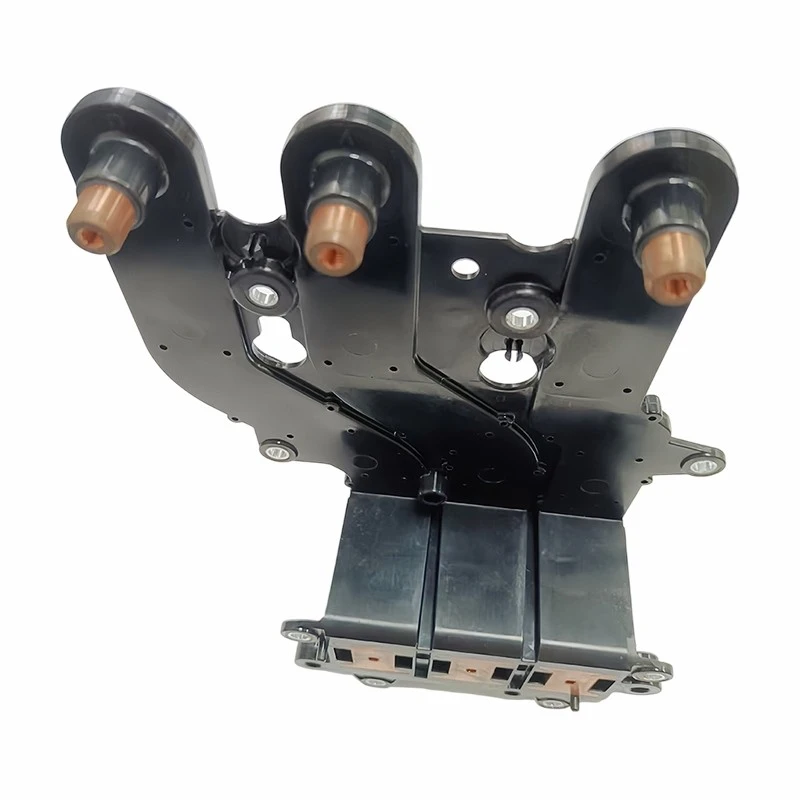

5. Low Crosstalk
Crosstalk is the unwanted coupling of signals between adjacent optical fibers or channels within a connector. In automotive optical systems, crosstalk can cause interference and signal degradation, especially in multi - fiber connectors.
In a multi - fiber connector, such as those used in automotive infotainment systems or ADAS sensor networks, multiple optical fibers are bundled together. If the crosstalk between these fibers is not properly controlled, it can lead to errors in data transmission and reduced system performance.
To minimize crosstalk, our Automotive Connectors are designed with proper shielding and isolation techniques. We use materials with low dielectric constants to reduce the electromagnetic coupling between the fibers. The layout of the fibers within the connector is also carefully designed to minimize the proximity between adjacent fibers, further reducing crosstalk.
6. Compatibility with Different Optical Fiber Types
Automotive optical systems may use different types of optical fibers, such as single - mode fibers and multi - mode fibers. Single - mode fibers are typically used for long - distance and high - speed data transmission, while multi - mode fibers are more suitable for short - distance applications.
As an Automotive Connector supplier, we offer connectors that are compatible with both single - mode and multi - mode fibers. Our connectors are designed to accommodate the different core diameters and numerical apertures of these fibers, ensuring a seamless connection and optimal optical performance. Whether it is a long - range communication system in an autonomous vehicle or a short - range in - car network, our connectors can meet the requirements of different fiber types.
7. Ease of Installation and Maintenance
In addition to the optical performance requirements, automotive connectors also need to be easy to install and maintain. In the automotive manufacturing process, time is of the essence, and connectors that are difficult to install can slow down the production line. Similarly, in the field, easy - to - maintain connectors can reduce downtime and repair costs.
Our Automotive Connectors are designed with user - friendly features. They have a simple and intuitive design that allows for quick and easy installation. The connectors are also modular, which means that they can be easily replaced or upgraded if necessary. This not only simplifies the maintenance process but also provides flexibility for future system enhancements.
Conclusion
As an Automotive Connector supplier, we are committed to providing connectors that meet the strict optical performance requirements of automotive optical systems. Our connectors offer low insertion loss, high return loss, excellent environmental resistance, high bandwidth capability, low crosstalk, compatibility with different fiber types, and ease of installation and maintenance.
If you are in the market for high - quality automotive connectors, we invite you to explore our product range. You can learn more about our Automotive Connector, Silicon Steel Sheet Insulator, and EV Busbar Connector by visiting our website. We are ready to work with you to provide the best solutions for your automotive optical system needs. Contact us today to start a procurement discussion and take your automotive optical systems to the next level.
References
- "Optical Fiber Communication Principles and Practice" by John M. Senior.
- "Automotive Electronics Handbook" edited by Ronald K. Jurgen.
- Industry standards and specifications related to automotive optical connectors.




