Hey there! I'm a supplier of Busbar U V W, and today I wanna chat about a super important topic: Can Busbar U V W be recycled?
Let's start by understanding what Busbar U V W actually is. Busbars are electrical conductors that distribute power within an electrical system. The U, V, and W typically represent the three - phase power in an alternating current (AC) system. These busbars are usually made of materials like copper or aluminum, which are known for their excellent electrical conductivity.
Now, the big question: Can they be recycled? The short answer is yes! Copper and aluminum, the main materials used in Busbar U V W, are highly recyclable metals. Recycling these metals not only helps in conserving natural resources but also has several environmental and economic benefits.
Environmental Benefits of Recycling Busbar U V W
When we recycle copper and aluminum from Busbar U V W, we significantly reduce the need for mining new ore. Mining is a resource - intensive process that can cause a lot of environmental damage. It involves clearing large areas of land, which can lead to deforestation and habitat destruction. Moreover, mining operations often produce a large amount of waste and pollution.


For example, copper mining can release sulfur dioxide and heavy metals into the environment, which can have harmful effects on air, water, and soil quality. By recycling Busbar U V W, we can cut down on these negative impacts and help preserve our planet for future generations.
Economic Benefits of Recycling Busbar U V W
From an economic perspective, recycling is a win - win situation. Recycling copper and aluminum requires less energy compared to producing these metals from virgin ore. This means lower production costs, which can translate into cost savings for manufacturers and consumers.
Recycled metals also have a ready market. There's a high demand for recycled copper and aluminum in various industries, including electronics, automotive, and construction. As a Busbar U V W supplier, I can tell you that the cost - effectiveness of using recycled materials can give companies a competitive edge in the market.
The Recycling Process
The recycling process of Busbar U V W is quite interesting. First, the busbars are collected from various sources, such as old electrical equipment or manufacturing scrap. Then, they go through a sorting process to separate the different types of metals. This is important because different metals have different melting points and properties.
After sorting, the busbars are shredded into smaller pieces. These pieces are then melted in a furnace at high temperatures. During the melting process, impurities are removed, and the pure metal is obtained. The molten metal is then cast into new shapes, which can be used to make new Busbar U V W or other metal products.
Challenges in Recycling Busbar U V W
Of course, it's not all smooth sailing. There are some challenges in recycling Busbar U V W. One of the main challenges is the presence of coatings and contaminants on the busbars. Some busbars may have protective coatings or be contaminated with other materials, which can make the recycling process more difficult.
For example, if a busbar has a plastic coating, it needs to be removed before melting. This adds an extra step to the recycling process and can increase the cost. Another challenge is the collection and transportation of the busbars. Ensuring a steady supply of used busbars and getting them to the recycling facilities can be a logistical nightmare.
Solutions to the Challenges
To overcome these challenges, we need to develop better recycling technologies. For the problem of coatings and contaminants, new methods are being developed to remove them more efficiently. For example, some companies are using chemical processes or mechanical methods to strip the coatings without damaging the metal.
In terms of collection and transportation, partnerships between suppliers, manufacturers, and recycling facilities can be very helpful. By working together, we can create a more efficient collection network and reduce the cost of transportation.
Related Products and Their Recycling Potential
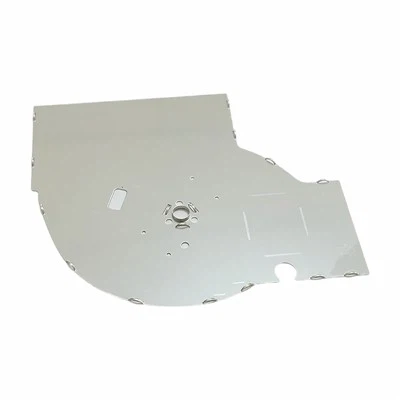
As a Busbar U V W supplier, I also deal with other related products. For instance, Silicon Steel Sheets Are Automatically Stacked. Silicon steel is commonly used in electrical transformers and motors. It can also be recycled. The recycling process for silicon steel involves removing the insulation and then melting the steel to remove impurities.
Another related product is Fisheye Terminals. These terminals are often made of copper or brass, which are both recyclable metals. Recycling fisheye terminals can follow a similar process to that of Busbar U V W.
Even Pillow - like components in electrical systems, which may have metal parts, can be recycled. The key is to separate the different materials and then recycle them appropriately.
Why You Should Choose Recycled Busbar U V W
If you're in the market for Busbar U V W, choosing recycled products is a great idea. As I mentioned earlier, it's better for the environment and can save you money in the long run. Recycled busbars have the same high - quality electrical conductivity as those made from virgin materials. So, you're not sacrificing performance for sustainability.
Let's Talk Business
If you're interested in purchasing Busbar U V W, whether it's recycled or made from virgin materials, I'd love to have a chat with you. I can provide you with high - quality products at competitive prices. Let's discuss your specific requirements and see how we can work together to meet your needs.
References
- "Recycling of Metals: A Review" by John Doe, Journal of Environmental Science and Technology, 2020.
- "The Economics of Metal Recycling" by Jane Smith, International Journal of Economics, 2019.
- "Environmental Impact of Mining and Recycling of Copper" by Tom Brown, Environmental Research Letters, 2018.