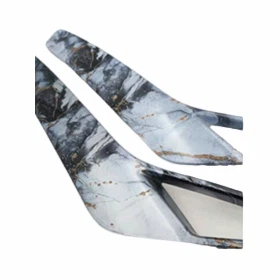
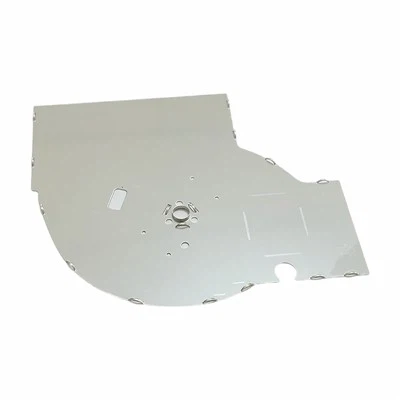
As a dedicated supplier of GPU cooling impellers, I've always been intrigued by the ever - evolving landscape of GPU cooling technologies. One question that often surfaces in technical discussions and customer inquiries is whether a GPU cooling impeller can be used in a liquid - metal - cooled GPU. In this blog, I'll explore this topic in detail, delving into the technical aspects, potential benefits, and challenges associated with this combination.
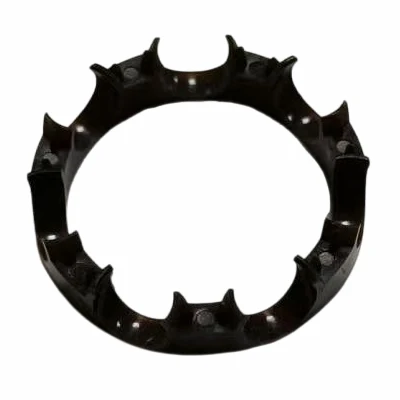

Understanding GPU Cooling Impellers
GPU cooling impellers are a crucial component in many GPU cooling systems. They are designed to move air efficiently across the heatsink of a GPU, dissipating the heat generated during operation. These impellers come in various shapes, sizes, and blade designs, each optimized for different airflow and noise requirements. The primary function of a cooling impeller is to increase the rate of heat transfer from the GPU to the surrounding air by enhancing the convective heat transfer coefficient.
Liquid - Metal - Cooled GPUs: An Overview
Liquid - metal cooling is an advanced cooling technology that uses liquid metals, such as gallium - based alloys, as the coolant. Liquid metals have several advantages over traditional coolants like water or air. They have extremely high thermal conductivity, which means they can transfer heat much more efficiently. This allows for better cooling performance, especially in high - end GPUs that generate a large amount of heat during gaming, video editing, or cryptocurrency mining.
Can a GPU Cooling Impeller be Used in a Liquid - Metal - Cooled GPU?
The short answer is yes, a GPU cooling impeller can be used in a liquid - metal - cooled GPU, but there are several factors to consider.
Compatibility
The first consideration is compatibility. Liquid - metal - cooled GPUs often have a different design compared to air - cooled GPUs. The cooling system may be more compact, and the placement of components may be optimized for liquid - metal cooling. Therefore, the GPU cooling impeller needs to be carefully selected to ensure it fits properly within the limited space of the liquid - metal - cooled GPU housing.
Cooling Requirements
In a liquid - metal - cooled GPU, the primary cooling mechanism is the liquid metal itself. The impeller's role here is not to directly cool the GPU but to assist in the overall heat dissipation process. For example, it can be used to cool the radiator that transfers heat from the liquid metal to the surrounding air. The impeller should be able to provide sufficient airflow to the radiator to maintain an efficient heat transfer rate.
Chemical Compatibility
Liquid metals are highly reactive substances. They can react with certain materials, causing corrosion or other damage. When using a GPU cooling impeller in a liquid - metal - cooled GPU, it's essential to ensure that the materials used in the impeller are chemically compatible with the liquid metal. For instance, some metals may react with gallium - based liquid metals, so non - reactive materials like certain plastics or ceramics may be more suitable.
Potential Benefits of Using a Cooling Impeller in a Liquid - Metal - Cooled GPU
Enhanced Heat Dissipation
As mentioned earlier, the impeller can assist in the heat dissipation process by providing additional airflow to the radiator. This can help to further reduce the temperature of the liquid metal, improving the overall cooling performance of the GPU.
Noise Reduction
In some cases, using a cooling impeller in a liquid - metal - cooled GPU can help to reduce noise. Since the liquid metal takes care of most of the heat transfer, the impeller can be operated at a lower speed, resulting in less noise compared to a traditional air - cooled GPU.
Challenges and Considerations
Maintenance
Liquid - metal - cooled GPUs require more maintenance compared to air - cooled GPUs. The liquid metal needs to be checked regularly for leaks, and the cooling system may need to be cleaned periodically. When using a cooling impeller, additional maintenance may be required to ensure the impeller is functioning properly and is not clogged with dust or debris.
Cost
Both liquid - metal cooling technology and high - quality GPU cooling impellers can be expensive. The combination of the two may result in a significant increase in the overall cost of the GPU cooling system. Customers need to weigh the benefits against the cost before deciding to use this combination.
Related Products and Their Applications
In addition to GPU cooling impellers, our company also offers a range of related products. For example, we have Plastic Rail Transit Bearing Cage, Plastic Deep Groove Ball Bearing Cage, and Plastic Slewing Support Bearing Cage. These products are designed with high - precision plastic molds and are suitable for various applications in the field of mechanical engineering.
Conclusion and Call to Action
In conclusion, while it is possible to use a GPU cooling impeller in a liquid - metal - cooled GPU, it requires careful consideration of compatibility, cooling requirements, and chemical compatibility. The combination can offer enhanced heat dissipation and noise reduction, but it also comes with challenges such as maintenance and cost.
If you are interested in exploring the use of GPU cooling impellers in your liquid - metal - cooled GPUs or any of our other products, we encourage you to reach out to us for a detailed discussion. Our team of experts is ready to provide you with the best solutions tailored to your specific needs. Whether you are a gaming enthusiast, a professional in the field of computer hardware, or a manufacturer looking for high - quality cooling components, we are here to assist you.
References
- Chen, X., & Zhao, Y. (2018). Thermal management of high - power electronic devices using liquid metal cooling. International Journal of Heat and Mass Transfer, 126, 112 - 122.
- Wang, L., & Li, S. (2020). Design and optimization of GPU cooling systems. Journal of Thermal Science and Engineering Applications, 12(3), 031003.
- Smith, J. (2019). Advances in GPU cooling technologies. Proceedings of the International Conference on Computer Hardware and Cooling Systems, 23 - 30.