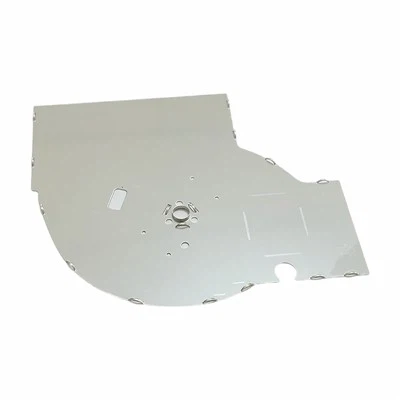
As a supplier of GPU cooling impellers, I often receive inquiries from customers about the compatibility of our products with liquid - cooled GPU systems. This question is not only relevant to the technical aspects of GPU cooling but also has a significant impact on the overall performance and longevity of the GPU. In this blog post, I will delve into the feasibility of using a GPU cooling impeller in a liquid - cooled GPU system, exploring the technical details, advantages, and potential challenges.
Understanding Liquid - Cooled GPU Systems
Liquid - cooled GPU systems have gained popularity in recent years due to their superior cooling efficiency compared to traditional air - cooled systems. In a liquid - cooled setup, a coolant (usually a mixture of water and additives) is circulated through a radiator and a water block attached to the GPU. The coolant absorbs heat from the GPU and transfers it to the radiator, where it is dissipated into the surrounding air. This process is highly effective in maintaining low temperatures, especially for high - performance GPUs that generate a significant amount of heat.
The Role of a GPU Cooling Impeller
A GPU cooling impeller is a key component in an air - cooled GPU system. It is responsible for generating airflow over the heat sink, which helps to dissipate heat from the GPU. The impeller rotates at high speeds, drawing in cool air and expelling hot air. The design and performance of the impeller can significantly affect the cooling efficiency of the system.
Can a GPU Cooling Impeller be Used in a Liquid - Cooled GPU System?
The short answer is yes, a GPU cooling impeller can be used in a liquid - cooled GPU system, but with some considerations.
Advantages
- Enhanced Radiator Cooling: In a liquid - cooled system, the radiator plays a crucial role in dissipating heat from the coolant. A GPU cooling impeller can be used to increase the airflow over the radiator, improving its heat dissipation efficiency. By forcing more air through the radiator fins, the impeller can help to transfer heat from the coolant to the surrounding air more effectively.
- Backup Cooling: In case of a failure in the liquid - cooling system, such as a leak or a pump malfunction, the cooling impeller can provide a secondary cooling mechanism. This can prevent the GPU from overheating and potentially causing damage.
- Noise Reduction: Some liquid - cooled systems can be quite noisy, especially when the pump is running at high speeds. A well - designed GPU cooling impeller can operate at a lower noise level while still providing adequate cooling. This can improve the overall user experience, especially in a quiet environment.
Challenges
- Space Constraints: Liquid - cooled GPU systems often have a more compact design compared to air - cooled systems. Adding a cooling impeller may require additional space, which can be a challenge in some cases. It is important to ensure that the impeller can be installed without interfering with other components in the system.
- Compatibility: Not all GPU cooling impellers are compatible with liquid - cooled systems. The impeller needs to be able to generate enough airflow to effectively cool the radiator, and it should also be able to fit into the available space. It is crucial to choose an impeller that is specifically designed for use in liquid - cooled systems.
- Power Consumption: Running a cooling impeller in addition to the liquid - cooling system will increase the power consumption of the GPU. This can have an impact on the overall energy efficiency of the system, especially in a high - performance setup.
Technical Considerations
When considering using a GPU cooling impeller in a liquid - cooled system, several technical factors need to be taken into account.
Airflow and Pressure
The impeller needs to be able to generate sufficient airflow and pressure to effectively cool the radiator. The airflow rate is measured in cubic feet per minute (CFM), and the pressure is measured in static pressure (mmH₂O). A higher CFM indicates a greater volume of air being moved, while a higher static pressure is necessary to overcome the resistance of the radiator fins.
Fan Size and Design
The size and design of the impeller can also affect its performance. Larger impellers generally have a higher CFM but may require more space. The blade design can also impact the airflow and noise level. For example, impellers with curved blades are often more efficient at generating airflow and can operate at a lower noise level.
Control and Speed
It is important to have control over the speed of the impeller. This can be achieved through a fan controller or by using a motherboard with built - in fan control features. By adjusting the speed of the impeller, it is possible to optimize the cooling performance while minimizing power consumption and noise.
Our GPU Cooling Impellers
As a supplier of GPU cooling impellers, we offer a range of products that are suitable for use in liquid - cooled GPU systems. Our impellers are designed with high - quality materials and advanced manufacturing techniques to ensure optimal performance and reliability.
We also provide custom - made solutions to meet the specific requirements of our customers. Whether you need an impeller with a specific size, airflow rate, or noise level, we can work with you to develop a product that meets your needs.

If you are interested in our VR Glasses Mini Cooling Impeller, Plastic Rail Transit Bearing Cage, or Plastic Needle Roller Bearing Cage, please feel free to contact us for more information. We are committed to providing our customers with the best products and services, and we look forward to the opportunity to work with you on your GPU cooling needs.
Conclusion
In conclusion, a GPU cooling impeller can be used in a liquid - cooled GPU system, offering several advantages such as enhanced radiator cooling, backup cooling, and noise reduction. However, there are also some challenges that need to be considered, such as space constraints, compatibility, and power consumption. By carefully selecting the right impeller and considering the technical factors, it is possible to achieve optimal cooling performance in a liquid - cooled GPU system.
If you have any questions or would like to discuss your specific requirements, please do not hesitate to contact us. We are here to help you find the best cooling solution for your GPU.
References
- "Thermal Management in High - Performance Computing: A Review", Journal of Thermal Science and Engineering Applications
- "Liquid Cooling Systems for Electronic Devices: Principles and Applications", Springer