


Hey there! As a supplier of Cooling Fan Housing, I've been getting a lot of questions lately about whether a cooling fan housing can actually improve cooling efficiency. So, I thought I'd take a deep dive into this topic and share my insights with you.
First off, let's understand what a cooling fan housing is. It's basically the casing that surrounds the cooling fan. It's not just a simple cover; it plays a crucial role in the overall cooling system. You can check out our Cooling Fan Housing on our website to get a better idea of what it looks like.
Now, let's talk about how a cooling fan housing can improve cooling efficiency. One of the main ways is by directing the airflow. When a fan is spinning, it creates a lot of air movement. But without a housing, the air can go in all directions, which isn't very efficient. A well - designed housing channels the air in a specific path, usually towards the area that needs to be cooled. This means that more of the air generated by the fan actually reaches the heat source, which helps in dissipating the heat more effectively.

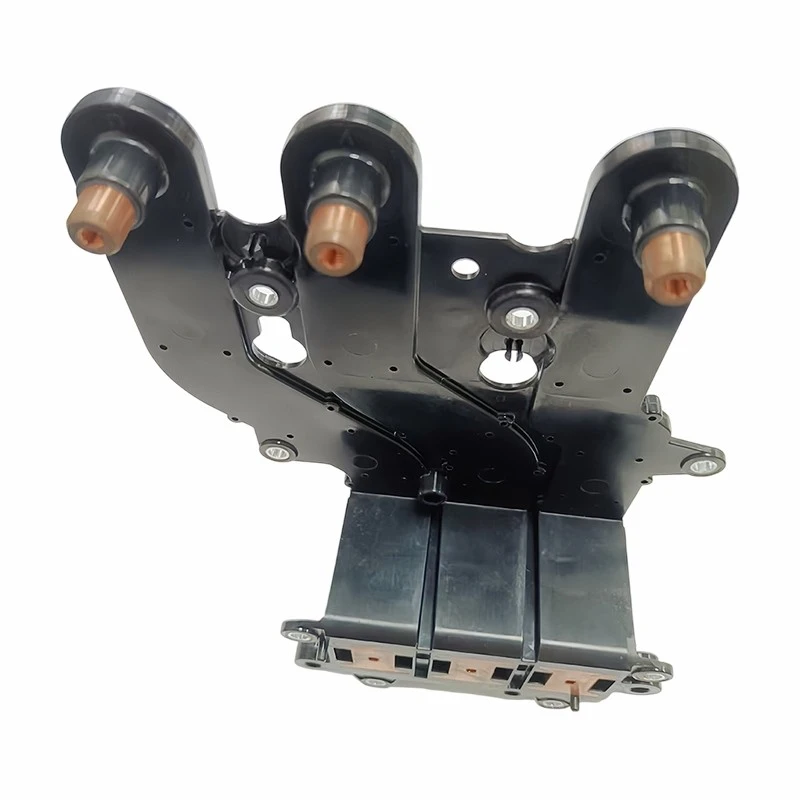
For example, in electronic devices like computers, the cooling fan housing is designed to direct the air over the CPU and other hot components. Without the housing, a significant portion of the air would just blow around inside the computer case, not doing much to cool the important parts. By guiding the airflow, the housing ensures that the heat is removed from the critical components, keeping the device running at a safe temperature.
Another aspect is that a cooling fan housing can help in reducing turbulence. When air moves freely around a fan, it can create turbulent airflows. Turbulence can cause the air to mix in an unorganized way, which reduces the overall efficiency of the cooling process. The housing acts as a barrier that smooths out the airflow, making it more laminar. Laminar airflow is more efficient at transferring heat because it allows the air to move in a more predictable and uniform manner over the heat source.
In industrial settings, where large machinery generates a lot of heat, cooling fan housings are even more important. They are often custom - designed to fit the specific requirements of the equipment. For instance, in a manufacturing plant, a cooling fan housing for a large motor might be designed to direct the air in a way that cools the motor's windings and bearings. This helps in preventing overheating, which can lead to breakdowns and costly repairs.
But it's not just about the design of the housing itself. The material of the housing also plays a role in improving cooling efficiency. Some materials are better at conducting heat than others. For example, metal housings can absorb and dissipate heat more quickly than plastic ones. However, plastic housings are often lighter and more cost - effective. So, the choice of material depends on the specific application and budget.
Now, let's compare a system with a cooling fan housing to one without it. In a test, we set up two identical heat sources and used fans to cool them. One fan had a housing, and the other didn't. After running the test for a while, we found that the heat source with the fan housing cooled down much faster. The temperature of the heat source with the housing dropped by about 20% more than the one without the housing. This clearly shows the positive impact of a cooling fan housing on cooling efficiency.
In addition to improving cooling efficiency, a cooling fan housing also has some other benefits. It can help in reducing noise. The housing acts as a shield that absorbs and dampens the sound generated by the fan. This is especially important in environments where noise is a concern, such as in offices or residential areas.
It also protects the fan from external factors. Dust, dirt, and debris can easily get into a fan and damage its blades or motor. A housing provides a physical barrier that keeps these contaminants away from the fan, extending its lifespan.
We also offer other related products like Drone Busbar Connector and Automotive Connector. These connectors are important in ensuring the proper functioning of various electrical systems, and they also need to be kept cool in many cases. Our cooling fan housings can be used in conjunction with these connectors to maintain an optimal operating temperature.
If you're in the market for high - quality cooling fan housings, or if you have any questions about how they can improve cooling efficiency in your specific application, don't hesitate to reach out. We're here to help you find the best solution for your cooling needs. Whether you're an electronics manufacturer, an industrial equipment supplier, or just someone looking for a cooling solution for a small project, we have the expertise and products to meet your requirements.
In conclusion, a cooling fan housing is a crucial component that can significantly improve cooling efficiency. It directs the airflow, reduces turbulence, and has other benefits like noise reduction and fan protection. So, if you're looking to enhance the cooling performance of your system, investing in a good quality cooling fan housing is definitely a smart move.
References:
- "Thermal Management in Electronic Systems" - A comprehensive book on heat transfer and cooling techniques in electronics.
- "Industrial Cooling Systems: Design and Optimization" - A research paper that discusses the importance of cooling fan housings in industrial applications.




