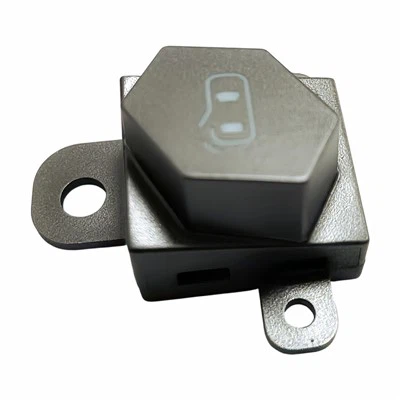
In the automotive industry, connectors play a crucial role in ensuring reliable electrical connections. Two primary types of connectors are widely used: surface - mount and through - hole automotive connectors. As an automotive connector supplier, understanding the differences between these two types is essential for providing the best solutions to our customers.
Physical Structure
Surface - mount connectors are designed to be mounted directly onto the surface of a printed circuit board (PCB). They are typically smaller in size compared to through - hole connectors. The leads of surface - mount connectors are soldered to the pads on the PCB surface. This design allows for a more compact PCB layout, which is highly beneficial in modern automotive electronics where space is often at a premium. For example, in the development of advanced driver - assistance systems (ADAS), the need for miniaturization is critical, and surface - mount connectors can help achieve this goal.
On the other hand, through - hole connectors have leads that are inserted through holes in the PCB. The leads are then soldered on the opposite side of the board. This type of connection provides a more robust mechanical bond between the connector and the PCB. The through - hole design is better suited for applications where the connector may be subject to significant mechanical stress, such as in automotive engines or in areas with high vibration.
Manufacturing Process
The manufacturing process for surface - mount connectors is more automated and efficient. Surface - mount technology (SMT) allows for high - speed placement of components on the PCB. The connectors are placed using pick - and - place machines, which can accurately position multiple connectors in a short time. After placement, the PCB goes through a reflow soldering process, where the solder paste on the pads melts and forms a connection between the connector leads and the PCB. This process is well - suited for mass production, enabling us to produce a large number of automotive connectors quickly and cost - effectively.
In contrast, the manufacturing of through - hole connectors involves a more labor - intensive process. The leads need to be manually inserted through the holes in the PCB, which is a time - consuming task. After insertion, wave soldering is commonly used to solder the leads. Wave soldering involves passing the PCB over a wave of molten solder. Although this process can also be automated to some extent, it generally has a lower production speed compared to SMT.
Electrical Performance
In terms of electrical performance, surface - mount connectors have certain advantages. Their shorter lead lengths result in lower inductance and capacitance, which can improve signal integrity, especially at high frequencies. This makes them ideal for applications such as in - vehicle infotainment systems and communication modules, where high - speed data transfer is required.
Through - hole connectors, however, can handle higher currents. The larger leads and the more substantial connection to the PCB allow for better heat dissipation, making them suitable for power - related applications in the automotive industry, such as battery management systems and power distribution units.
Environmental Resistance
Automotive connectors are often exposed to harsh environmental conditions, including temperature variations, humidity, and vibration. Surface - mount connectors are generally more sensitive to these conditions. Their smaller size and the nature of the surface - mount connection make them more vulnerable to mechanical stress caused by thermal expansion and contraction. However, with proper encapsulation and design, surface - mount connectors can still be used in many automotive environments.
Through - hole connectors have better environmental resistance. The through - hole design provides a more secure mechanical connection, which can withstand higher levels of vibration and shock. Additionally, the larger leads and the deeper solder joints offer better protection against moisture and contaminants.
Cost Considerations
Cost is an important factor in the automotive industry. Surface - mount connectors are generally less expensive to manufacture due to the high - speed automated production process. The smaller size also reduces the amount of material used, further lowering the cost. However, the equipment required for SMT production is relatively expensive, which may increase the initial investment for manufacturers.
Through - hole connectors are more expensive to produce because of the labor - intensive manufacturing process. The larger size also means more material is used. But in some cases, the higher cost may be justified by the better mechanical and electrical performance in certain applications.
Application Examples
Surface - mount connectors are commonly used in automotive interior electronics, such as dashboard displays, climate control systems, and audio systems. For example, in a modern car's infotainment system, surface - mount connectors are used to connect the various components on the PCB, enabling high - speed data transfer between the touchscreen, radio module, and other devices.


Through - hole connectors are widely used in automotive power systems and under - the - hood applications. In a car's engine control unit (ECU), through - hole connectors are used to connect the power supply and sensors, where they need to withstand high temperatures and mechanical stress.
As an automotive connector supplier, we offer a wide range of both surface - mount and through - hole connectors to meet the diverse needs of our customers. Our Cooling Fan Housing products are designed with high - quality connectors to ensure reliable performance. Similarly, our Drone Busbar Connector and Silicon Steel Sheet Insulator also utilize appropriate connectors based on the specific requirements of the application.
If you are in the automotive industry and are looking for high - quality automotive connectors, we invite you to contact us for procurement and negotiation. We have a team of experts who can provide you with professional advice and solutions tailored to your specific needs.
References
- "Automotive Electronics Handbook" by Wolfgang G. Daehnick
- "Printed Circuit Board Design and Manufacturing" by Mark I. Montrose